Industry News
Empty Offices and Clean Paperwork: the H200 Investigation and the Supplier-Verification Lesson
An investigation found two companies cleared to receive Nvidia H200 chips operating from offices that appear abandoned. The supplier-verification lesson reaches far beyond GPUs.

An investigation published this week by Tom's Hardware found that two companies cleared to receive Nvidia's H200 AI chips, New Matrix and Maginfra, operate from offices that appear abandoned: building occupants unfamiliar with the companies, addresses that do not check out, and ties to sanctioned Chinese military suppliers. The report lands as Washington polices export-control loopholes, and it hands regulators exactly the playbook they needed: front companies with clean paperwork and empty desks.
For the accessory and electronics trade, the lesson reaches far beyond GPUs, and it lands on a theme this column has been repeating all year: in a market full of clean paperwork, verification is the only moat.
The Pattern: Paperwork Outruns Reality
The pattern is older than this investigation and bigger than it. A company exists on paper: registered, documented, certified on file, with a plausible address and a working phone number. The reality behind the paper can be anything: an empty office, a subcontractor nobody has met, a product assembled from components nobody tested. Export-control regimes, marketplace rules and certification frameworks all try to catch this gap with paperwork, and the paperwork is exactly what the sophisticated fakers do best.
The H200 story is the export-control version. The accessory market has its own versions: cables printed with certification tiers they were never tested to, drives listed at speeds their controllers cannot sustain, docks whose per-port power budgets exist only in the listing. The failure lands at the buyer, because the counterparty who created the gap can, as the reporting puts it, simply disappear.
What Verification Actually Costs, and What It Saves
The defense is not a bigger budget. It is a shorter trip to the physical world. For meaningful purchases, the verification stack is short: a video walkthrough of the production line (not a showroom), test reports that name the product and the testing standard, a factory address that matches the business license, and a sample ordered through the same channel as the bulk order. Each step filters a different class of front, and together they filter the class that matters: companies whose reality does not match their paperwork.
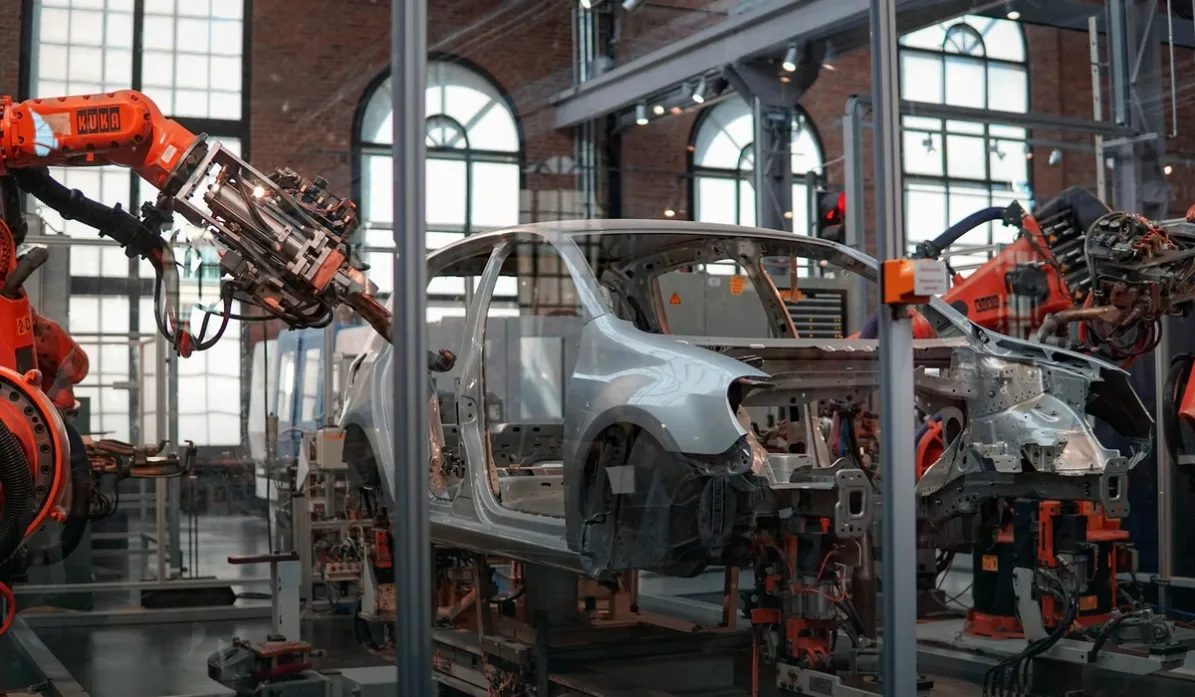
For manufacturing partners, add the one check that separates factories from trading companies: the production floor on camera. SMT lines, assembly, aging racks: a real factory shows them. A showroom cannot.
The Mattzon Read
This is the part of the H200 story that reads like our own brochure, written by an investigative journalist: Mattzon builds in our own 5,700-square-meter factory in Shenzhen, with SMT, assembly and testing in-house, per-port functional testing and aging screening on every unit, and 89% private-mold products behind our OEM and ODM programs. Our address checks out, our floor runs on camera, and our documents, test reports, certifications, per-configuration power budgets, ship with the order, because in a market full of clean paperwork, the factory tour is the strongest certification.
If you are verifying suppliers for your next program, message Kitty's team on WhatsApp at +86 186 8146 2886, and start with the video walkthrough: we will put the production floor on camera first.
Sources: Tom's Hardware, investigation into New Matrix and Maginfra (H200 export approvals, abandoned offices, ties to sanctioned suppliers); the broader pattern per industry trade coverage.