Oct 2, 2026Industry News
The EU's 2028 USB-C Cable Rules: What Regulation 2025/2052 Means for Buyers
Regulation (EU) 2025/2052 sets ecodesign requirements for external power supplies, wireless chargers and USB-C cables, applying from 28 December 2028. Buyers who source early can turn compliance from
Brussels has finished writing its next chapter of charger law, and this one
is aimed directly at the accessories — including the USB-C cables our industry
sells by the container. Commission Regulation (EU) 2025/2052, adopted on 13
October 2025 and published in the Official Journal on 24 November 2025, lays
down ecodesign requirements for external power supplies, wireless chargers
and USB-C cables. It applies from 28 December 2028, which sounds far away and
is not: product lines being quoted right now for 2027-2028 delivery will land
inside these rules, and the buyers who understand them early are about to gain
a quiet edge over the ones who read the label in 2029.
The common charger rules most people know — the USB-C mandate under the Radio
Equipment Directive, Regulation 2022/2380 — told device makers which port to
fit; laptops joined it in April 2026. Regulation 2025/2052 complements that
law by regulating the things you plug into the port. As the official EUR-Lex
summary and compliance firms such as Nemko and GlobalNorm explain, the
regulation does three things relevant to our shelf.
First, external power supplies in the 25-to-100-watt range must be
interoperable, which in practice means supporting USB Power Delivery — the
negotiation standard that lets one adapter safely charge a phone, a tablet
and a laptop — with the framework reaching power supplies up to 240W. The
patchwork of proprietary quick-charge protocols gets a legal deadline.
Second — and this is the part that should make every cable buyer sit up —
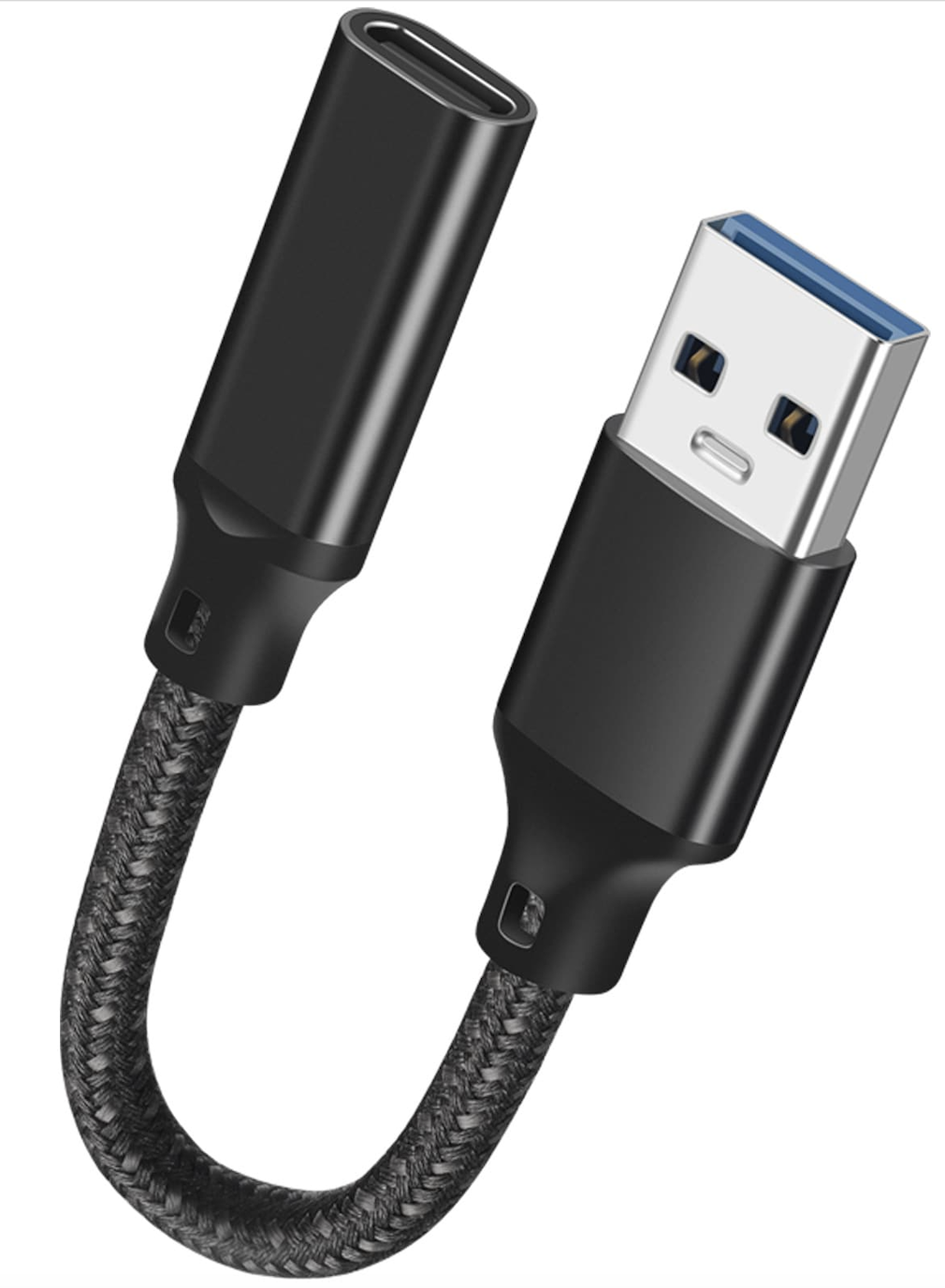
USB-C to USB-C cables will have to meet the official USB specifications for
their design, including electrical requirements such as maximum resistance
and voltage drop, harmonized into EU law. Compliance watchers have noted the
regulation effectively writes the USB-IF cable specifications into ecodesign
law for the European market.
That second point is the industry finally catching up with an old, ugly
story. Our pain-point library keeps the examples that circulated for years in
communities like r/UsbCHardware: the famous Chromebook-Pi incident, where a
cable built without the proper 56kΩ resistor identification damaged a
computer; the non-compliant cables that run hot or negotiate wrongly. Until
now, the difference between a compliant cable and a dangerous one was a line
in a specification you had to trust the seller to honor. From December 2028,
in the EU, it becomes a legal requirement with enforcement behind it — and
the buyers who can already prove compliance will be selling certainty in a
market that just learned to ask for it.
Third, wireless chargers get their own ecodesign and efficiency requirements,
pulling a fast-growing accessory category under the same discipline.
What should buyers actually do with three years of runway? Three moves.
Ask for the electrical test data now, not in 2028. Every serious USB-C cable
supplier can produce USB-IF-related test documentation for resistance and
voltage drop; the regulation will simply make that paperwork mandatory in the
EU. When a supplier can hand over cable test reports alongside the usual CE,
FCC and RoHS certificates today, you have found the supplier whose 2028 is
already handled. When one cannot, you have learned something cheaper than a
recall.
Treat compliance as shelf space. Retailers and marketplaces are already
tightening documentation demands ahead of each EU deadline, as the common
charger rollout showed through 2024-2026. Importers with certificates in the
listing survive those squeezes; importers without them watch listings go
dark in Q4.
And price the story. A cable that is certified, tested and legally future-
proof for the EU market is not a commodity next to an uncertified twin — it
is the twin with insurance. Buyers serving European retail should be
negotiating on that difference now.
This is familiar ground for us. Mattzon manufactures USB-C cable lines in its
own Shenzhen factory with CE, FCC and RoHS certification as standard, and we
provide certificate copies and test reports with bulk orders — because when
the law finally names the requirement, our customers want to point at a file,
not a promise. If you are planning 2027-2028 cable programs for Europe,
message Kitty's team on WhatsApp at +86 186 8146 2886, and we will walk you
through the documentation pack.
Sources: EUR-Lex summary "Ecodesign requirements – external power supplies
(as from 2028)"; Regulation (EU) 2025/2052 (adopted 13 Oct 2025, OJ 24 Nov
2025); Nemko, "Ecodesign 2025/2052 is coming"; GlobalNorm, "EU common
charger: an outlook"; EFTA factsheet 32025R2052.