
Oct 7, 2026Industry News
GaN Moves Upstream: What October's Supply-Chain Moves Mean for 2027 Accessories
GaN is moving from consumer chargers into professional power supplies, as two October supply-chain moves show. What cheaper gallium nitride means for 2027 accessories.
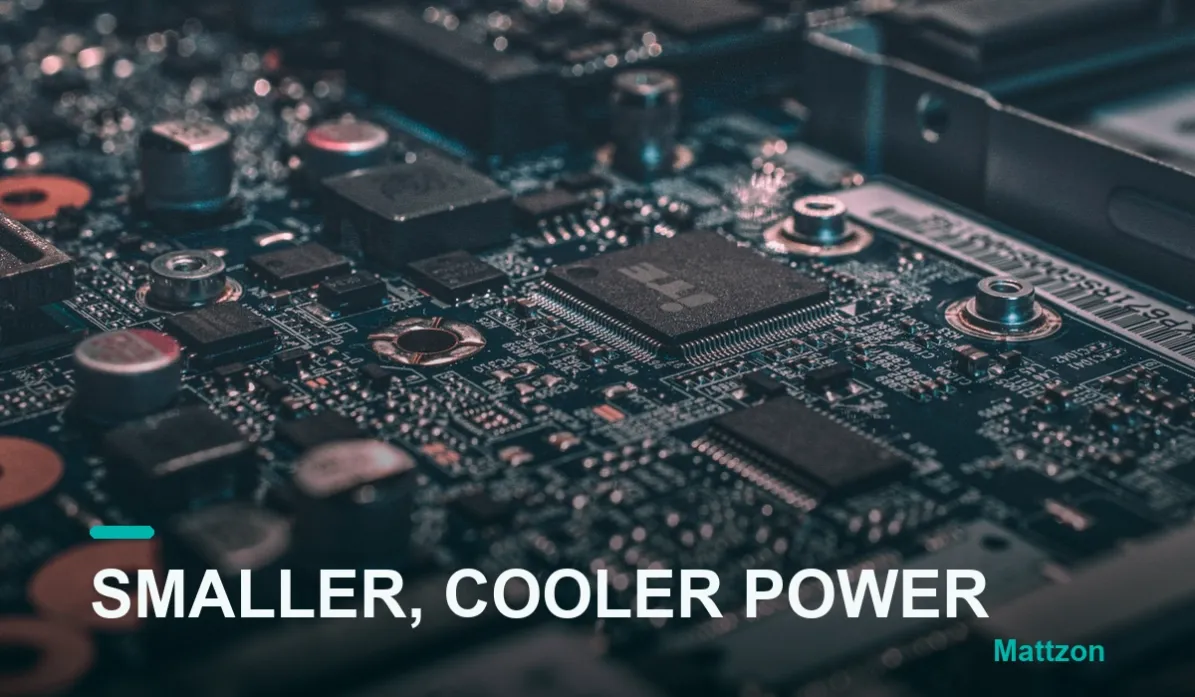
The most important charging news of October is not a charger. It is two announcements further up the chain, in the part of the industry that most buyers never see. TT Electronics expanded its gallium nitride power supply portfolio, as reported by Power Systems Design in early October: a new family of compact, high-efficiency AC/DC supplies spanning 65W to 330W, built to medical-grade safety expectations. Days earlier, Power Electronics News covered Onsemi's GaNEXUS launch and a partnership with Innoscience, the low-voltage GaN specialist, to push packaged GaN devices into wider production.
Translation for anyone who buys or builds accessories: the GaN supply chain is scaling up and moving downstream, and the components inside 2027's chargers, hubs and docks are about to get smaller, cooler and cheaper. What began as a premium trick inside travel chargers is becoming the default power technology across the shelf, including the professional and medical grades where failure is not an option.
Why GaN Matters at Your Desk
Gallium nitride switches power with far less energy loss than the silicon it replaces, and lost energy in a power circuit is heat. Less loss therefore means smaller transformers, cooler bodies and more power from the same size, the physics behind every slim 100W charger that would have been a brick five years ago. For hubs and multi-port docks, the same logic applies internally: every watt converted with less waste is a watt that does not age the capacitors and solder joints around it.
That is why heat keeps appearing in this column. Thermal discipline is the difference between a hub that lasts and a hub that dies one port at a time, and GaN is simply the newest, most powerful tool for keeping temperatures down where the power flows.
When GaN Becomes a Buzzword
Success has a side effect, and buyers should see it coming. As GaN supply scales and component prices fall, "GaN" is turning into a marketing word, printed on boxes regardless of whether the power design deserves it. A GaN chip inside a careless layout still makes a hot product; a well-engineered silicon design can still beat a bad GaN one. The technology is a means, and the means is becoming cheap exactly because it works.
So the buyer's checklist stays the same while the vocabulary changes. Ask for efficiency and thermal data, not the ingredient list. Ask what the product's surface temperature does at full load, what its per-port power budgets are with everything running, and what burn-in testing catches before shipment. These are the questions the medical-grade power industry asks as a matter of course, and the two announcements above show that discipline now flowing toward consumer price points.
The Mattzon Read
Our lane is hubs, docks, cables and readers rather than chargers, but the physics is shared: power converted cleanly is heat that never reaches your devices. We build with derated power components, aluminum bodies as part of the thermal path, and a per-unit aging test before shipment, and we publish per-port power budgets because thermal honesty is becoming the market's dividing line. As GaN components get cheaper through supply-chain moves like this month's, expect Mattzon's 2027 generations to adopt them where they genuinely improve the product, verified by test data rather than by buzzword.
Planning accessory lines for 2027? Message Kitty's team on WhatsApp at +86 186 8146 2886, and we will share the thermal numbers behind the specifications.
Sources: Power Systems Design, TT Electronics GaN AC/DC power supply portfolio expansion (65W to 330W, medical-grade, early Oct 2026); Power Electronics News, Onsemi GaNEXUS launch and Innoscience low-voltage GaN partnership (~Oct 2, 2026).essories.