Buying Guides
Reading HDMI Cable Tiers: Standard, High Speed, Premium and Ultra High Speed
Standard, High Speed, Premium, Ultra High Speed: HDMI's cable tiers are a certification ladder, not marketing words. How to read them and match the tier to the setup.
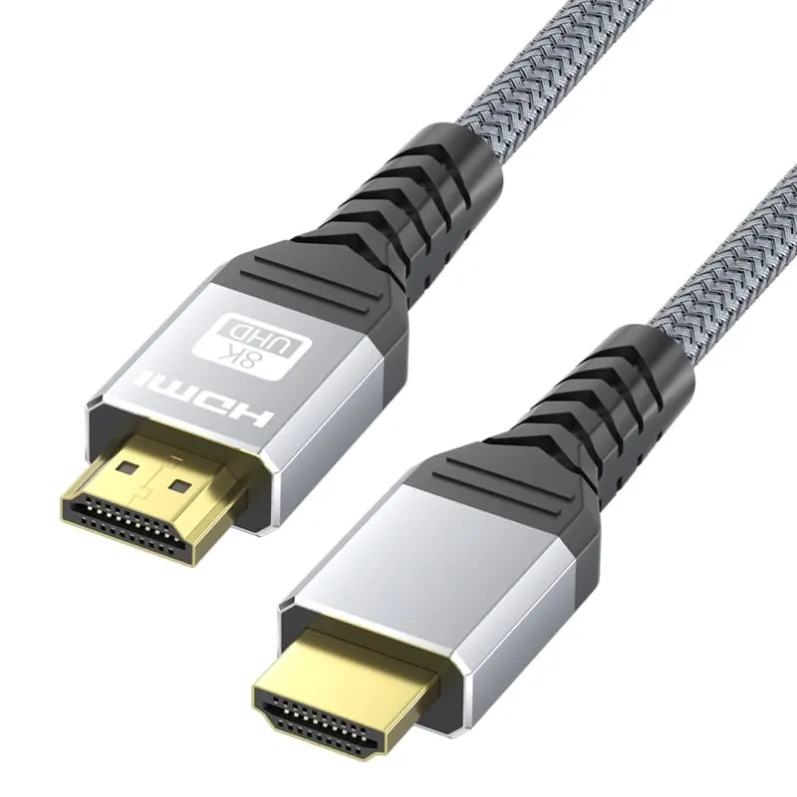
HDMI cables carry four certification names, and most buyers cannot name two of them. Standard, High Speed, Premium and Ultra High Speed are not marketing flavors: they are HDMI's official cable categories, each certified to carry a defined bandwidth, each built for a different era of displays. Buying the wrong tier does not break anything; it simply caps your setup at the cable's ceiling and leaves the rest of your investment idle. Here is the ladder, and how to stand on the right rung.
Four Tiers, One Label System
The categories climb with the resolutions they were certified for. Standard HDMI cables were certified for the 1080i-and-early-4K era and are, honestly, obsolete for anything modern. High Speed cables carry 1080p and 4K at 30Hz comfortably, the tier that powered a decade of living rooms. Premium High Speed was certified for the 18-gigabit HDMI 2.0 generation: 4K at 60Hz with HDR, the tier most current setups actually need. And Ultra High Speed cables are certified for the 48-gigabit HDMI 2.1 class: 4K at 120Hz, 8K, dynamic HDR, eARC and the gaming features that came with the last console generation.
Two rules make the ladder usable. First, buy for the display's maximum, not its average: a 4K 120Hz television needs an Ultra High Speed cable even if most content is 60Hz, because the tier certifies the capability the panel will eventually use. Second, treat unlabeled cables as Standard no matter what the printing claims: the tier exists precisely because printing and performance diverge, and HDMI's certification program, with verification through the licensing body, exists to close that gap.
The Certification Is the Specification
The deeper principle: a tier name on a certified cable is a tested claim. HDMI's licensing administrator certifies cables against each class, and the newest additions to retail, the first HDMI 2.2-class cables, arrived with their own certification tier for the 96-gigabit future, as retail coverage of the launch noted in September. The practical takeaway for buyers at every level: the certification program is the only part of a cable listing that an independent body has verified, which makes it the most reliable sentence on the box.
The same discipline applies to every standard our shelves carry: USB-IF tiers for USB-C data rates, VESA's DP40 and DP80 certifications for DisplayPort, and HDMI's ladder here. Certified tiers, verified documents, tested shipments: that trio is what separates a cable that works from a cable that hopes.
Match the Tier to the Setup
The practical mapping for current desks and living rooms: Premium High Speed (18Gbps) covers 4K 60Hz with HDR, the mainstream sweet spot for TVs, monitors and projectors. Ultra High Speed (48Gbps) is required for 4K at 120Hz, 8K panels, and current-generation consoles on their high-refresh modes. And for the 96-gigabit HDMI 2.2 class now appearing on flagship displays, look for the new certification as it rolls out, because the panels are ahead of the cables and will stay there through next year.
One cable connects the whole chain only if the chain deserves it. Buy the tier your system actually uses, verify the certification, and the display shows what its panel was built to show. Our HDMI lines are built to those tiers in our own factory, tested per unit, certified, and documented on bulk orders, with OEM and ODM programs on a line where 89% of products are private mold. If you are matching displays to cables for a channel or a client, message Kitty's team on WhatsApp at +86 186 8146 2886, and tell us the panel: we will match the tier.